





What is parsley, what is it good for and how to grow it at home?
Parsley (Petroselinum crispum) is one of the most widely used culinary and medicinal herbs in the world. It is known for its fresh flavour and wide range of uses – from the kitchen to traditional medicine. There are two main types: leaf parsley (most common for cooking) and root parsley (often used in soups and stews).
Beyond its culinary role, parsley is a nutritional “bomb”: it is rich in vitamin C, vitamin K and folic acid, and also contains minerals such as iron, potassium and magnesium. Its antioxidants, such as apiol and flavonoids, help protect cells from oxidative stress and support overall health.
Quick facts
- Germination time: 14–21 days
- Germination temperature: 15–20 °C
- Time to harvest: 70–90 days (leaves), 120–150 days (root)
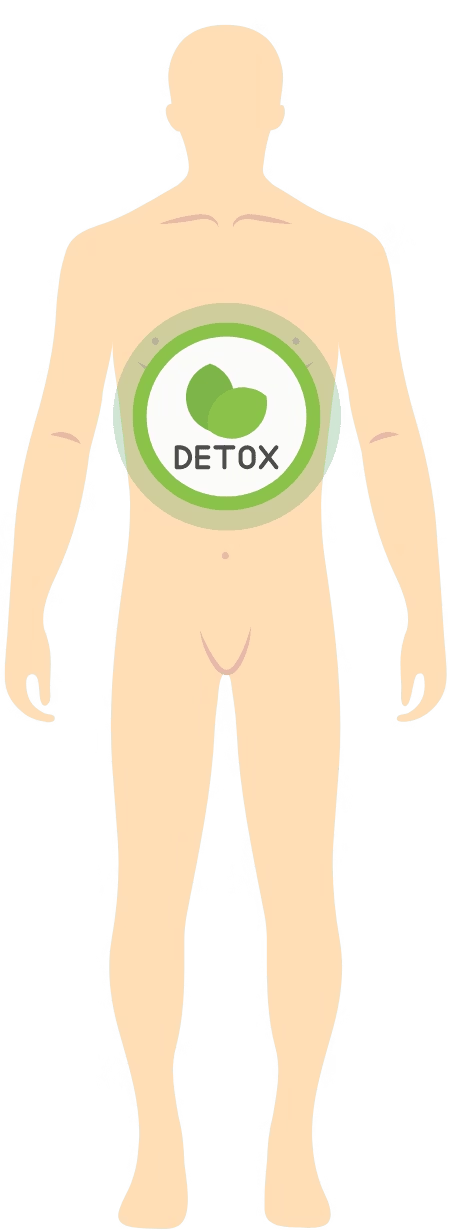
- Primary effects: detoxification, immune support, bone health
- Vitamins/minerals: C, K, folic acid, iron, potassium, magnesium
- Effects on the body: strengthens immunity, aids detoxification, supports heart and bone health
Growing parsley at home
You can grow parsley in the garden, on the balcony or indoors all year round. It likes semi-shaded spots, regular moisture and loose, nutrient-rich soil. In smart gardens and planters with automatic watering it achieves steady growth and a constant supply of fresh leaves.
Planting parsley from seed
- Soak the seeds in water for 12–24 h for faster germination.
- Sow them in a loose substrate or in smart soil pods.
- Sow shallowly (0.5–1 cm deep).
- Keep the moisture constant, but avoid too much water.
- The first leaves appear after 2–3 weeks.
Growing in Simply and Aurelia smart gardens
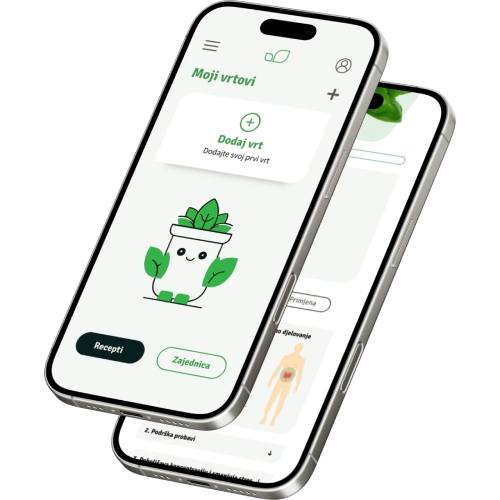
Our SIMPLY and AURELIA smart gardens let parsley grow with no worries about watering or transplanting. Just plant the smart soil pods with seeds and enjoy a constant supply of fresh leaves – ideal for cooking, smoothies or garnishing dishes.
How to harvest parsley so it keeps growing
- Always pick the outer leaves and leave the inner ones to keep growing.
- Regular harvesting encourages new leaves to form.
- It is best harvested in the morning, when the concentration of nutrients is at its highest.
Common problems and solutions
| Problem | Possible cause | Solution |
| Slow germination | Seeds not soaked, cold soil | Soak the seeds and use a warmer substrate |
| Yellow leaves | Lack of nutrients or too much water | Add fertiliser, adjust watering |
| Weak growth | Planting too densely | Thin out the plants |
| Leaf spots | Fungal diseases | Improve ventilation, use bio-based treatments |
| Pests | Aphids, slugs | Remove by hand, use natural repellents |
The difference between parsley and similar plants
- Leaf parsley (Petroselinum crispum var. crispum): most often used in dishes and as a garnish.
- Root parsley (Petroselinum crispum var. tuberosum): produces a root used in soups and stews.
- Celery and coriander: similar in appearance, but different in aroma and nutritional profile.
How to store parsley
- Fresh in water: place the stems in a glass of water and keep at room temperature.
- Freezing: chop and freeze in bags or in olive oil.
- Drying: dry in the shade and store in airtight containers.
- Parsley oil: for flavouring dishes and salads.
Conclusion
Parsley is not just a herb – it is a superfood that supports immunity, cleanses the body and adds freshness to every dish. With the SIMPLY and AURELIA smart gardens, you can grow it at home all year round – always fresh, healthy and close at hand.