







What is hyssop, what is it good for and how to grow it at home?
Hyssop (Hyssopus officinalis) is a perennial medicinal and aromatic herb from the mint family, known since ancient times. It has been used in folk medicine, cooking and as a seasoning thanks to its intense scent and bitter-aromatic flavour. Today it is valued as a plant that strengthens immunity, eases digestion and helps with respiratory complaints.
Beyond its medicinal properties, hyssop is also an ornamental plant thanks to its purple, blue or pink flowers, which attract bees and butterflies and so contribute to biodiversity.
Quick facts
- Germination time: 14–21 days
- Germination temperature: 18–22 °C
- Time to harvest: 80–90 days (young leaves and flowers)
- Primary effects: respiratory, digestive, antibacterial
- Vitamins/minerals: essential oils (pinocamphone, thujone, hyssopin), flavonoids, tannins
- Effects on the body: strengthens immunity, eases breathing, stimulates digestion
Growing hyssop at home
Hyssop thrives best in sunny positions and well-drained soil. It is very drought-resistant and ideal for growing in gardens, on balconies or in pots. Thanks to its hardiness and decorative look, it is often used as a hedge or border plant.
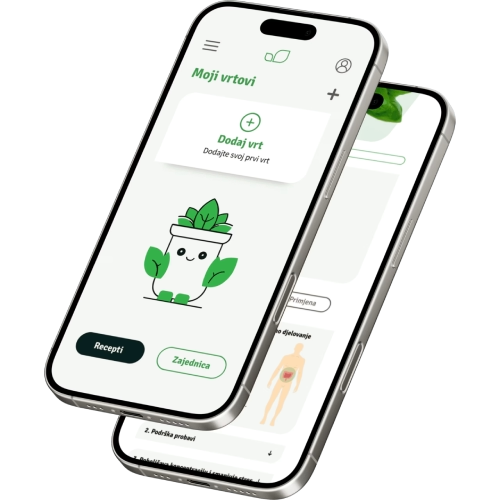
In smart gardens such as SIMPLY and AURELIA, hyssop can be grown all year round – automatically watered and lit, it always provides fresh leaves and flowers ready to use.
Planting hyssop from seed
- Sow the seeds shallowly in a loose substrate or use smart soil pods with seeds.
- Germination takes 14–21 days with warmth and moisture.
- After sprouting, thin out the plants and provide plenty of light.
- The plant is hardy and easy to maintain – it does not need much water.
Growing in SIMPLY and AURELIA smart gardens
Smart gardens let hyssop grow in optimal conditions, whatever the season. Automatic control of moisture and light ensures a healthy plant rich in essential oils, ideal for teas, syrups or cooking.
How to harvest and use hyssop
- Pick young leaves and flowering tops during blooming.
- Dry the leaves and flowers in an airy place, away from direct sun.
- The essential oils are most concentrated just before the flowers open.
Common problems and solutions
| Problem | Possible cause | Solution |
| Weak growth | Too little light | Move to a sunnier spot or use LED lighting |
| Yellow leaves | Too much moisture | Ensure drainage, reduce watering |
| Poor flowering | Lack of nutrients | Add natural fertiliser or use smart soil pods |
| Pests | Aphids, thrips | Remove by hand, use natural repellents |
| Wilting | Dry air, lack of water | Maintain minimal moisture and air the room regularly |
The difference between hyssop and sage
- Hyssop (Hyssopus officinalis): stronger aromatic scent, used for teas, syrups and herbal preparations.
- Sage (Salvia officinalis): milder flavour, more often used in cooking and medicine.
How to store hyssop
- Drying: the most common way to store it; the leaves and flowers keep their aroma.
- Freezing: finely chop fresh leaves and freeze in ice-cube trays.
- Hyssop oil: steep fresh leaves in olive oil for a natural extract.
Conclusion
Hyssop (Hyssopus officinalis) is a medicinal, aromatic and decorative plant that enriches both your space and your diet. It supports breathing and digestion, strengthens immunity, and also attracts useful pollinators. With the SIMPLY and AURELIA smart gardens, you can grow it all year round – simply and stress-free. art gardens SIMPLY and AURELIA, fresh sorrel is available to you all year round – simply and stress-free.