







What is woodland sage (Salvia nemorosa), what is it good for and how do you grow it at home?
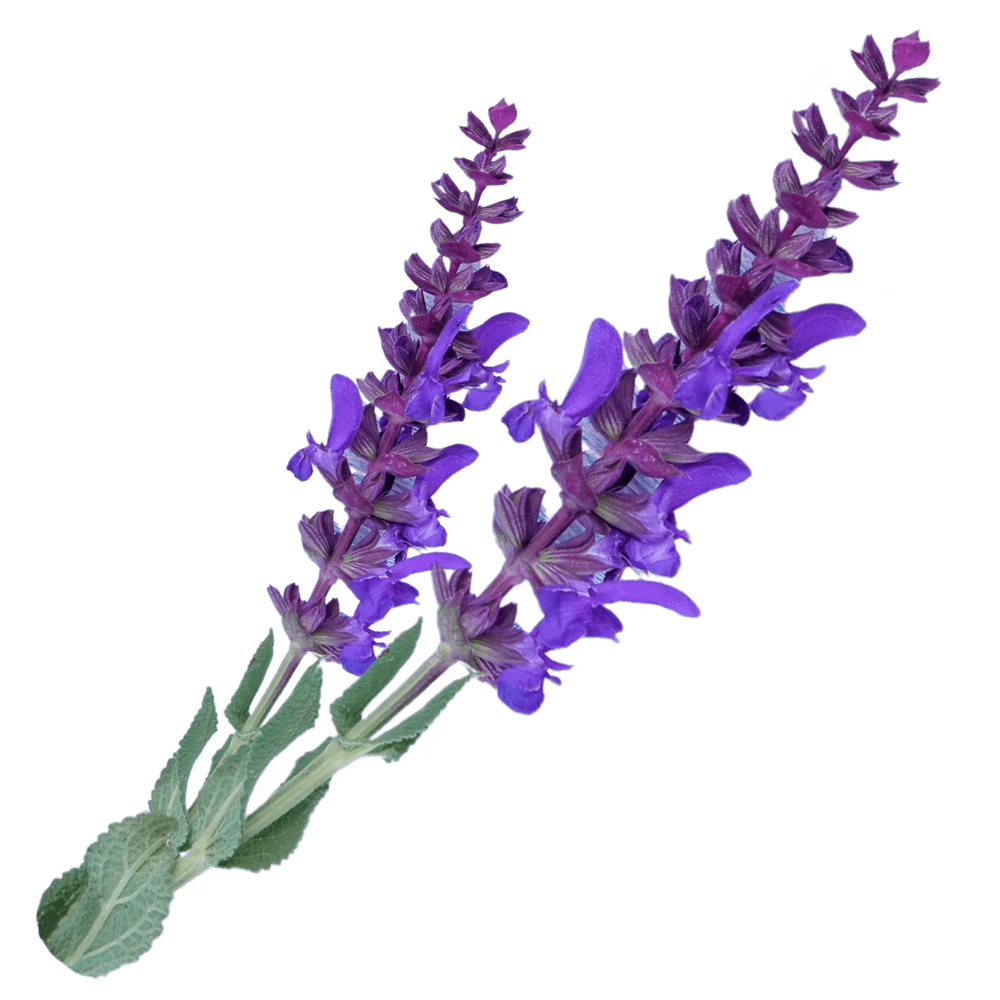
Woodland sage (Salvia nemorosa), also known as Balkan clary, is an ornamental and medicinal plant often grown for its dense, spike-like blooms in shades of purple, blue and pink. As well as being highly decorative, it has been used in folk medicine for centuries, especially for its anti-inflammatory and antibacterial properties.
Woodland sage attracts bees and butterflies and supports biodiversity, and its aromatic scent is often used in aromatherapy.
Quick facts
- Germination time: 14–21 days
- Germination temperature: 18–22 °C
- Time to flowering: 90–120 days
- Primary use: ornamental plant, medicinal use, attracts pollinators
- Vitamins/minerals: essential oils, antioxidants
- Effect on people: antibacterial and anti-inflammatory action, adds to the aesthetic value of a space
Growing woodland sage at home
Woodland sage thrives best in sunny spots and well-drained soil. It is very drought-tolerant and ideal for gardens and flower beds, as well as containers on balconies and terraces.
In smart gardens such as SIMPLY and AURELIA, woodland sage can be grown all year round – automatically irrigated and given optimal light, it delivers abundant blooms and a decorative look with little effort.
Planting woodland sage from seed
- Sow the seeds in a loose growing medium or use smart soil with seeds.
- Keep it moist until seedlings emerge (14–21 days).
- Once the plants grow stronger, thin them out and provide plenty of light.
- In SIMPLY and AURELIA smart gardens the process is simpler – no transplanting, and the plant automatically gets ideal conditions.
Growing in Simply and Aurelia smart gardens
Our smart gardens provide woodland sage with a constant supply of water and light. This means it will flower profusely and continuously, while enriching your space with its colour and fragrance.
How to harvest and care for woodland sage
- Remove spent flowers regularly to encourage new blooms.
- Cut back the stems after flowering to keep the plant compact.
- The plant can flower several times in a season if cared for properly.
Common problems and solutions
| Problem | Possible cause | Solution |
| Weak growth | Too little light | Move to a sunny spot or use LED lighting |
| Yellow leaves | Too much moisture | Reduce watering and ensure good drainage |
| Poor flowering | Lack of nutrients | Add natural fertiliser or use smart soil |
| Pests | Slugs, aphids | Remove by hand or use natural repellents |
| Wilting | Dry air, lack of water | Maintain moderate moisture and mist the leaves occasionally |
The difference between woodland sage and common sage
- Woodland sage (Salvia nemorosa): an ornamental plant with purple flower spikes, occasionally used in folk medicine.
- Common sage (Salvia officinalis): a culinary and medicinal herb, used in teas and dishes, rich in essential oils.
How to keep woodland sage
- In the garden or a container: cut back after flowering and water regularly.
- For drying: you can dry the flowers and leaves and use them for decorative or aromatic purposes.
- Indoors: keep it near a window or use an LED light.
Conclusion
Woodland sage (Salvia nemorosa) is a plant that combines beauty, fragrance and function. It brings lavish blooms, contributes to a healthier space and attracts pollinators. With the SIMPLY and AURELIA smart gardens, you can have it in your home all year round – fresh, blooming and easy to grow.