







What is sage, what is it good for and how do you grow it at home?
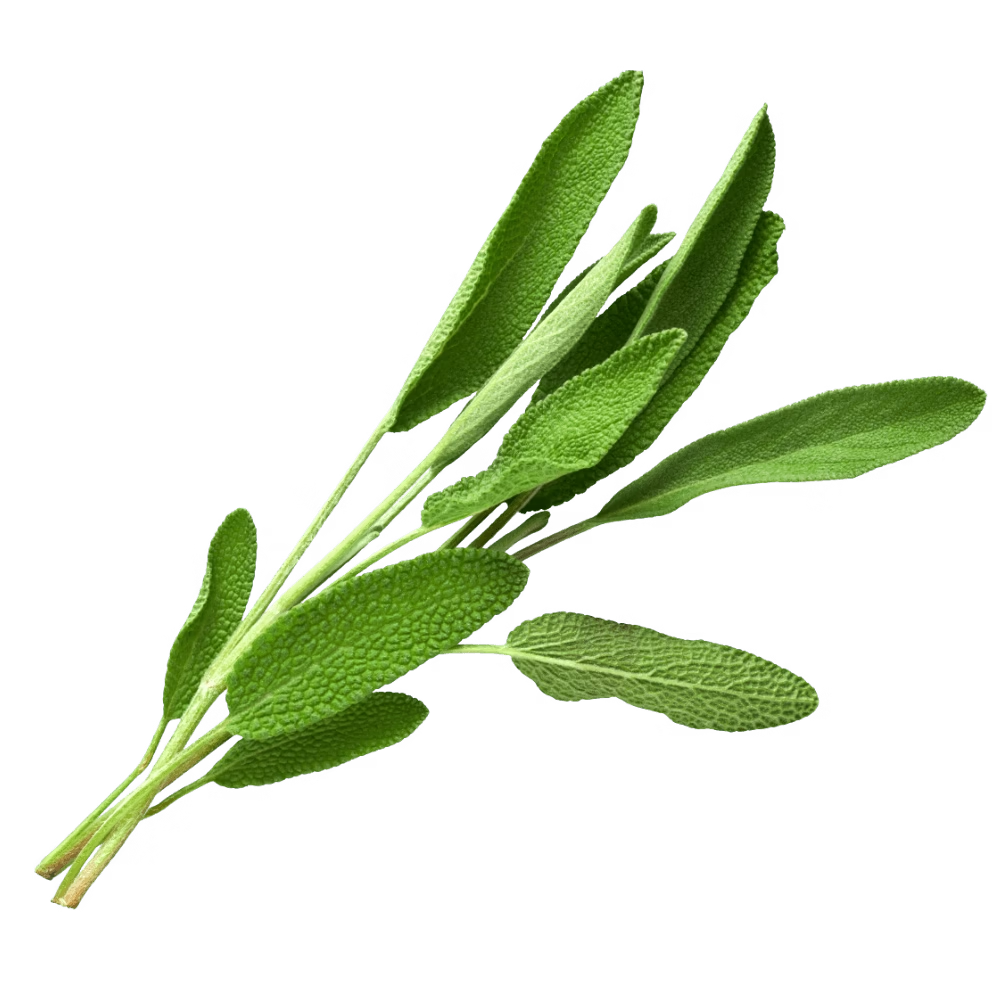
Sage (Salvia officinalis) is a Mediterranean medicinal herb and an indispensable seasoning in the kitchen. It is known for its greyish-green, aromatic leaves and powerful essential oils with proven antibacterial, anti-inflammatory and antioxidant effects.
Sage contains vitamins A, C and K, calcium, iron and essential oils (thujone, cineole, borneol). In folk and modern medicine it is used to relieve sore throats, gum inflammation, digestive complaints and symptoms of stress.
Quick facts
- Germination time: 10–20 days
- Germination temperature: 15–20 °C
- Time to harvest: 70–90 days
- Primary effects: antibacterial, anti-inflammatory, calming
- Vitamins/minerals: A, C, K, calcium, iron, essential oils
- Effect on the body: helps with sore throats, improves digestion, reduces stress
Growing sage at home
Sage loves sunny positions and well-drained soil, and it is drought-tolerant. It can be grown in the garden, on a balcony or in a pot indoors. It is an ideal plant for kitchen windowsills because it is easy to look after.
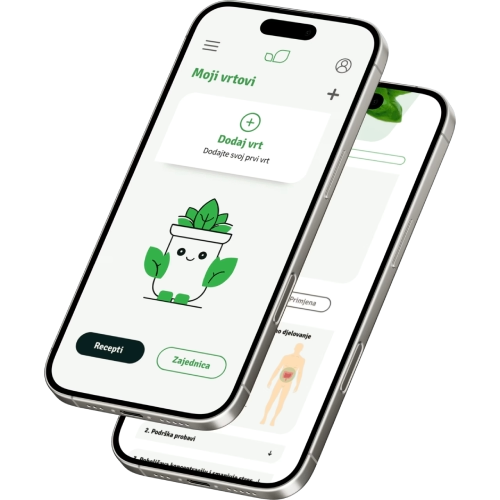
In smart gardens such as SIMPLY and AURELIA, sage develops without stress – automatic irrigation and optimal light ensure constant growth of aromatic leaves all year round.
Planting sage from seed
- Sow the seeds shallowly (0.5 cm) in a loose growing medium or use smart soils with seeds.
- Keep the medium moist until germination (10–20 days).
- After the seedlings emerge, thin the plants out and give them a sunny spot.
- Sage grows slowly at first, but later becomes a very hardy and long-lived plant.
Growing in the Simply and Aurelia smart gardens
Our smart gardens let you grow sage without transplanting or complicated maintenance. The automatic irrigation system and LED lights give it perfect growing conditions – even indoors.
How to harvest sage so it keeps growing
- Cut young leaves and stem tips – this encourages new growth.
- It is best harvested in the morning, when the concentration of essential oils is at its highest.
- Regular harvesting prevents the plant from becoming woody and preserves its aroma.
Common problems and solutions
| Problem | Possible cause | Solution |
| Slow germination | Low temperatures | Maintain warmth and moisture until the seedlings emerge |
| Yellow leaves | Too much moisture | Ensure drainage, reduce watering |
| Weak growth | Too little light | Move to a sunnier spot or use LED lighting |
| Pests | Aphids, mites, slugs | Use natural repellents or remove by hand |
| Woody stems | Older plants, too little harvesting | Regularly cut the young tips |
The difference between sage and other Mediterranean herbs
- Sage (Salvia officinalis): strong, aromatic flavour, medicinal properties, used in teas and dishes.
- Rosemary (Rosmarinus officinalis): fresher, pine-like aroma, well suited to meat dishes.
- Thyme (Thymus vulgaris): tiny leaves, intense aroma, often combined with sage.
How to store sage
- Drying: tie the stems into small bunches and hang in an airy, shaded place.
- Storing: keep the dried leaves in glass jars or paper bags.
- Freezing: fresh leaves can be frozen whole or in olive oil.
Conclusion
Sage is a plant with a strong flavour and a rich tradition. It brings health benefits, lifts the aroma of dishes and offers calm. With the SIMPLY and AURELIA smart gardens, you can always have fresh sage – within reach, all year round.