








What is celery, what is it good for and how do you grow it at home?
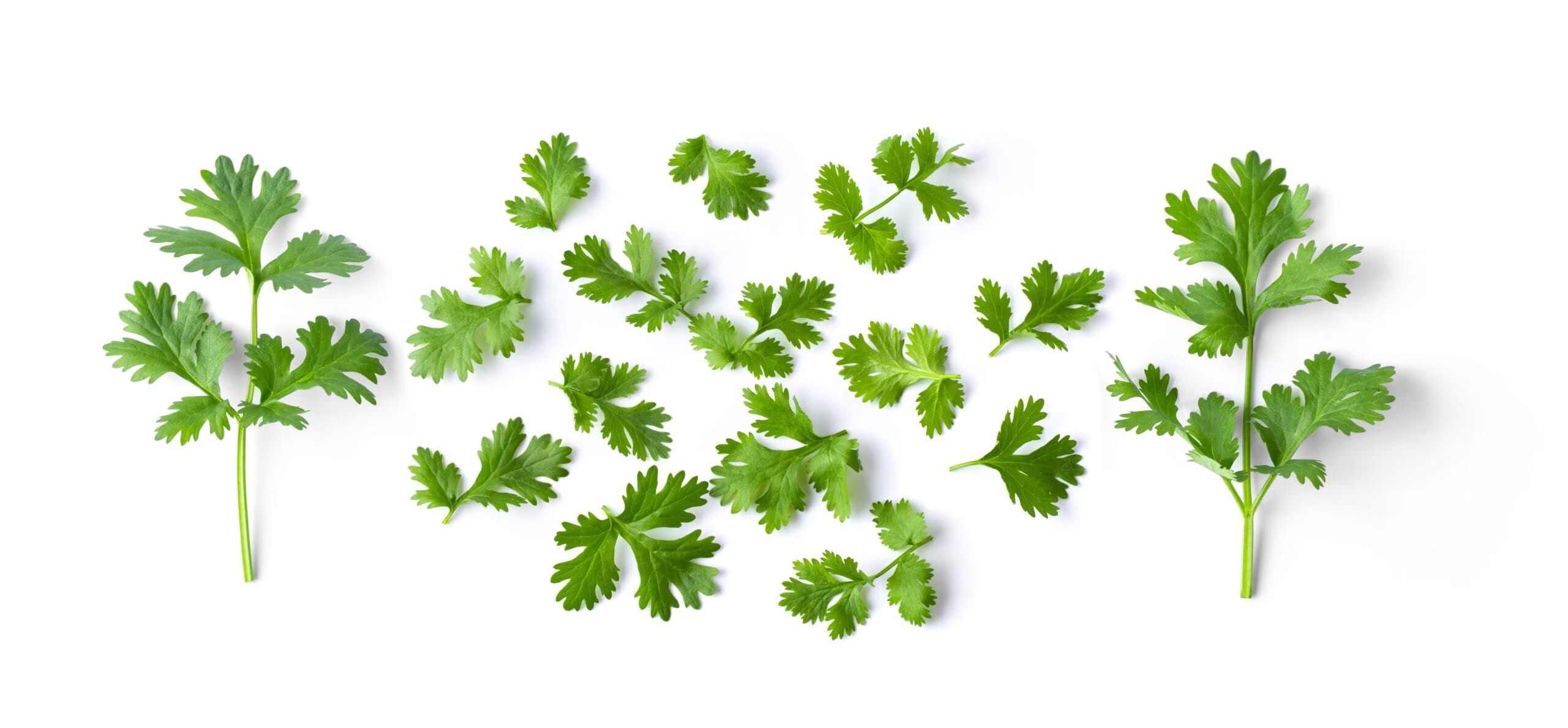
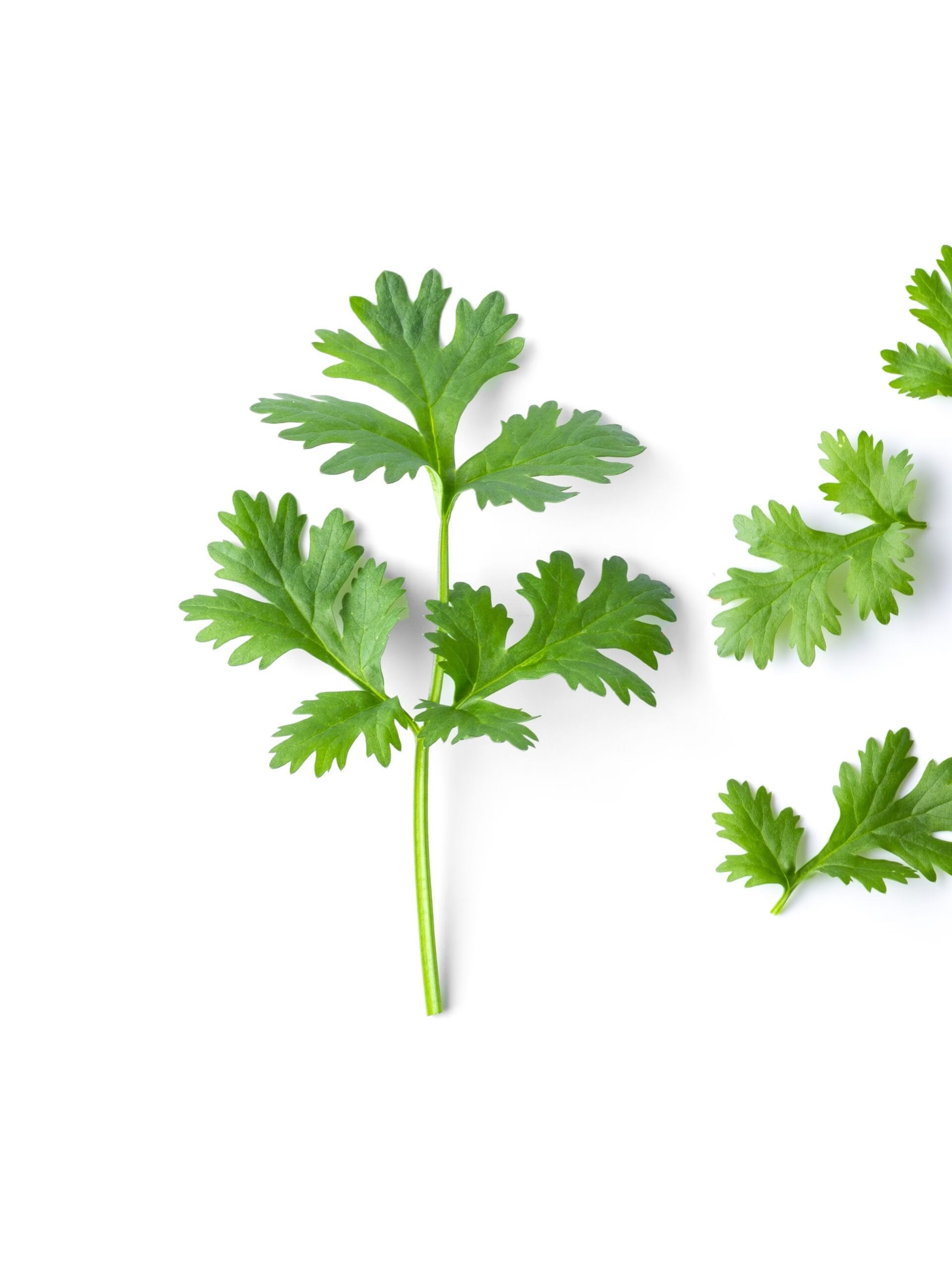
Celery (Apium graveolens var. secalinum), also known as leaf celery, is an aromatic plant grown mainly for its intensely flavoured leaves rather than the thick stalks of stalk celery. Its leaves have a strong aroma and are an essential seasoning in soups, stews, salads and many other dishes.
Beyond the kitchen, celery is valued for its wealth of vitamins A, C and K, folic acid, potassium and antioxidants. It is traditionally used to strengthen immunity, aid detox and support digestion.
Quick facts
- Germination time: 14–21 days
- Germination temperature: 15–20 °C
- Time to harvest: 70–90 days (young leaves earlier)
- Primary effect: detox, digestive health, immune support
- Vitamins/minerals: A, C, K, folic acid, potassium, fibre
- Effect on people: aids digestion, strengthens immunity, has a diuretic effect
Growing celery at home
Leaf celery likes moist, rich soil and semi-shaded spots. It needs regular watering, as it cannot tolerate drought. It can be grown in the garden, on balconies or in containers indoors.
In smart gardens such as SIMPLY and AURELIA, celery grows effortlessly – no worrying about watering or light conditions. The automatic system provides moisture and nutrients, and the plant produces fresh, aromatic leaves all year round.
Planting celery from seed
- Sow the seeds on the surface, as they need light to germinate.
- Germination takes 14–21 days, with constant moisture.
- Once the plant grows stronger, you can pick young leaves or let it grow into a larger rosette.
- In smart gardens, use smart soil with seeds for optimal growth.
Growing in SIMPLY and AURELIA smart gardens
Our smart gardens make growing celery stress-free – always enough moisture and nutrients, with no transplanting. Thanks to LED lighting, the plant develops strong and aromatic, and fresh leaves are available all year round, even indoors.
How to harvest celery so it keeps growing
- Regularly remove the outer leaves while the inner ones keep growing.
- Do not pull up the whole plant – that way you will have a continuous yield.
- Young leaves have the most intense scent and the best flavour.
Common problems and solutions
| Problem | Possible cause | Solution |
| Weak growth | Lack of nutrients | Add natural fertiliser or use smart soil |
| Yellow leaves | Too much water | Maintain moderate moisture, ensure good drainage |
| Bitter taste | Older leaves | Pick young leaves regularly |
| Pests | Aphids, slugs | Remove by hand, use natural repellents |
| Wilting | Lack of water | Maintain even moisture |
The difference between leaf celery and stalk celery
- Leaf celery (Apium graveolens var. secalinum): grown for its aromatic leaves, used as a seasoning.
- Stalk celery (Apium graveolens var. dulce): grown for its thick stalks, used as a vegetable in salads and dishes.
How to store celery
- Fresh leaves: keep in the fridge in a plastic or paper bag for up to 5 days.
- Freezing: finely chop the leaves and freeze them in ice cube trays.
- Drying: dry in an airy place and use as a seasoning all year round.
Conclusion
Celery (Apium graveolens var. secalinum) is an aromatic, nutritious plant that enriches your diet, supports digestion and strengthens immunity. It is easy to grow, and with the SIMPLY and AURELIA smart gardens, you can always have fresh leaves to hand – in the kitchen, the office or the living room.